Kawaii Happy Carrot Sticker
A Charming Little Design That Smiles Back — But Does It Stitch Well?
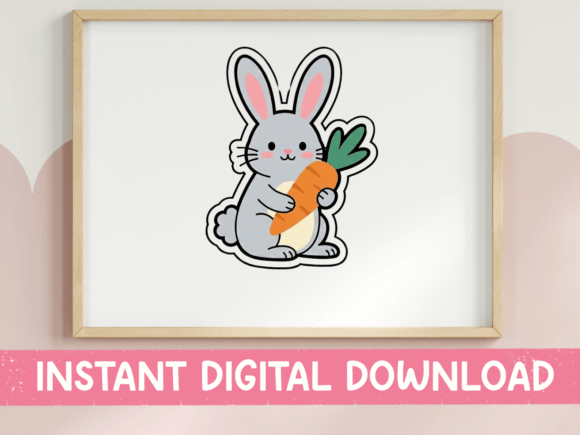
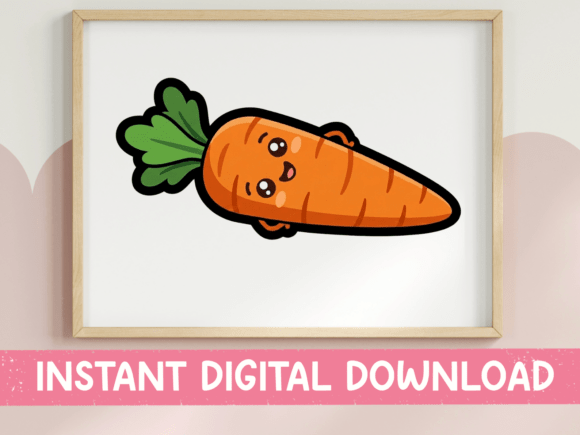
Let’s be real: I opened this Kawaii Happy Carrot Sticker file expecting something cute — and got exactly that. A plump, round orange carrot with a bushy green top, a wide cheerful grin, and soft rosy blush on its cheeks. It’s undeniably joyful, instantly legible, and feels like it belongs on a baby onesie or a kitchen towel hanging in a sunlit café. As an embroidery designer who’s stitched hundreds of kawaii-style graphics for Etsy sellers, boutique brands, and custom gift shops, I immediately asked myself: Will this hold up when translated into thread?
First Impressions: Simplicity With Personality
The strength of the Kawaii Happy Carrot Sticker lies in its intentional minimalism. There are no tiny eyelashes to vanish in satin stitch, no intricate leaf veins that’ll blur on cotton twill, and no overlapping layers that demand precise applique registration. Its circular shape is friendly to most hoop sizes, and the face uses bold, open features — wide eyes, a simple curved mouth — that translate cleanly into running or satin stitch without distortion. This isn’t just a graphic; it’s a machine embroidery design waiting for thoughtful execution.
Where It Shines: Real Projects, Real Customers
Last week, I prepped a batch of organic cotton tote bags for a local farmers’ market vendor — part of her “Rooted & Radiant” spring collection. I tested the Kawaii Happy Carrot Sticker on one bag as a small chest emblem (about 3.5" wide), using light tear-away stabilizer and high-contrast orange and kelly green threads. The result? Instant charm. Customers paused, smiled, pointed — one even asked if the carrot had a name. That kind of emotional resonance is gold for handmade product storytelling.
It also works beautifully on baby embroidery projects: think onesies, burp cloths, or crib mobiles. The rounded silhouette avoids sharp corners that could irritate delicate skin, and the cheerful expression reads clearly even at 2.75". On sweatshirt embroidery, it holds up well over fleece texture when stitch density is balanced — avoid overfilling the carrot body, or you’ll get stiffness instead of softness.
For Etsy sellers, this digital embroidery file is a quiet powerhouse. Pair it with neutral-toned tea towels, linen aprons, or unisex caps, and you’ve got a cohesive, brandable set of small shop products. It’s equally at home in holiday embroidery (think Easter baskets or spring-themed baby shower gifts) and wedding gifts (a playful “carrot cake” apron for the baker couple). As a graphics asset, it scales cleanly for printable mockups — essential for confident listing visuals.
Where to Pause — Not Every Fabric or Use Case Fits
That said, the Kawaii Happy Carrot Sticker isn’t magic. On ultra-thin fabrics like rayon challis or lightweight silk blends, the green top’s bushy texture can bleed or pucker without extra stabilizer support. On dark fabric, especially navy or charcoal, test your thread colors carefully: a pale blush may disappear entirely unless you add a subtle underlay or switch to a warm pink fill stitch.
Curved surfaces — like structured caps or knit beanies — require careful hooping and possibly reduced stitch density in the top foliage to prevent thread pull. And while it’s labeled under T-Shirt Designs, remember: t-shirts stretch. Always use cut-away stabilizer and consider a gentle zigzag basting stitch around the perimeter before embroidering to anchor the design.
Design Integrity in the Finished Product
What makes the Kawaii Happy Carrot Sticker stand out isn’t just cuteness — it’s consistency. When stitched cleanly, it reinforces handmade presentation and customer trust. Buyers recognize intentionality: the balanced spacing between smile and eyes, the proportional size of the blush versus the carrot body, the way the green top fans outward without tangling. That visual clarity builds professionalism, whether you’re selling embroidered patches on Etsy or branding staff aprons for a juice bar.
It also supports brand consistency. Because it’s not overly detailed or trend-dependent, it ages gracefully — unlike hyper-specific memes or seasonal fonts that feel dated by next season. For craft business owners building long-term design assets, that longevity matters.
Practical Notes Every Embroidery Designer Should Check
- Test first — Run it on scrap fabric matching your final project’s weight and stretch.
- Review stitch density — Especially in the green top; too dense = stiff, too loose = fuzzy.
- Confirm hoop size compatibility — Its round shape fits standard 4x4 hoops comfortably, but double-check if scaling up for larger tote bag designs.
- Inspect small details — Does the blush read as a soft highlight, or does it vanish into the orange fill? Adjust thread sheen or stitch direction if needed.
- Try black-and-white mockups — Ensures contrast holds up for monochrome branding or embroidery-only versions.
- Compare light vs. dark backgrounds — Some rosy blush tones need warm undertones to stay visible on heather grey or oatmeal fabric.
- Use proper stabilizer — Light tear-away for stable wovens, cut-away for knits, and medium-weight fusible for towels or napkins.
- Verify licensing — Since this is a graphics file marketed for crafters, confirm whether commercial embroidery rights are included before selling finished embroidered items or bundling it into digital product kits.
In short: the Kawaii Happy Carrot Sticker earns its place in your embroidery project queue — not because it’s flashy, but because it’s reliable, expressive, and quietly versatile. It doesn’t shout. It smiles. And when stitched right, that smile lands every time.